
WIOTC official news feed, bringing you real first-hand information
——WIOTC 2026•Industrial Internet Forum Successfully Held in Beijing
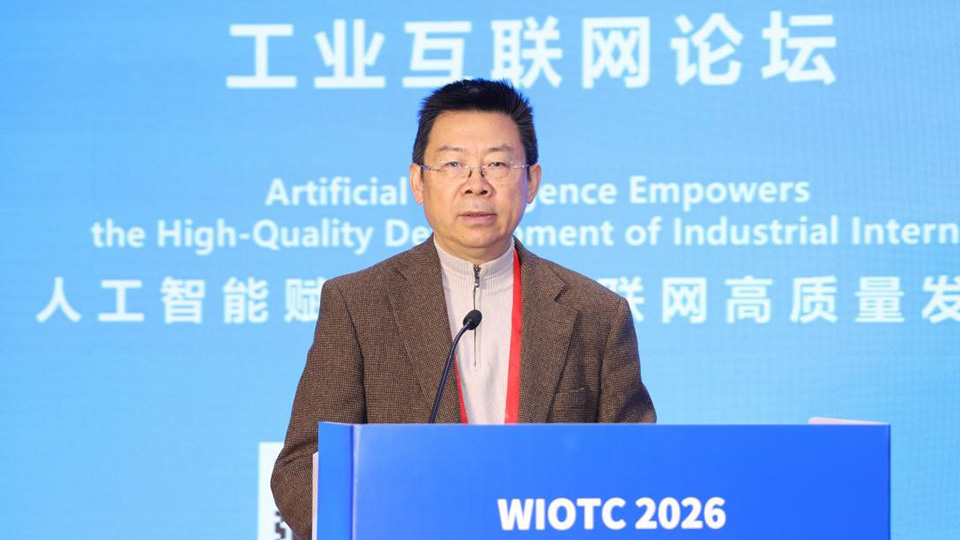
On November 3, 2026, the Industrial Internet Forum of the WIOTC 2026 was successfully held in Beijing. Centered on the theme “Artificial Intelligence Empowers the High-Quality Development of Industrial Internet”, the Forum was co-hosted by the China Information Industry Trade Association (CIITA) and CEC Industrial Internet Co., Ltd., and co-organized by the Industrial Internet Branch of the CIITA, alongside the Digital Economy Special Committee of the CIITA and Artificial Intelligence Manufacturing Industry Branch of the China Federation of Electronics and Information Industry (CFEII). More than 150 representatives from national ministries and commissions, academicians, industry experts, as well as government-industry-university-research stakeholders gathered at the site, conducting in-depth discussions on core topics including the deep integration of AI and the industrial internet, unlocking the value of data elements, and constructing a secure and trusted underlying infrastructure.
Distinguished guests in attendance included Yu Hongjun, Former Vice-Minister of the International Department of the CPC Central Committee; Academician Shen Changxiang and Academician Zhao Qinping of the Chinese Academy of Engineering; Li Zhengmao, Former General Manager of China Telecom Group and Chairman of the Board of the World Broadband Association (WBBA); Lu Chuncong, President of the China Academy of Industrial Internet (CAII); Xu Ningning, Chief Commercial Expert for China-ASEAN relations; Gao Yanjie, Former Deputy Director of the Informatization Office of the National Health Commission; and Deng Ziwei, Deputy Secretary of the Party Committee and Deputy General Manager of CEC Industrial Internet Co., Ltd. Among them, Yu Hongjun, Shen Changxiang, Zhao Qinping and Lu Chuncong delivered keynote reports, and Xu Ningning delivered remarks. The Forum was presided over by Zhu Lifeng, Leading Official in Charge (Acting) of the CIITA.
On October 9, 2026, the Central Committee of the CPC and the State Council issued the Opinions on Developing New-Quality Productive Forces, deploying 19 key initiatives across five dimensions. The document explicitly calls for deep integration of sci-tech innovation with industrial innovation, and of the real economy with the digital economy, and mandates full implementation of the “AI+” Initiative. This top-level design points the way for the coordinated development of the industrial internet and artificial intelligence, and provides a distinct policy backdrop for this Forum.
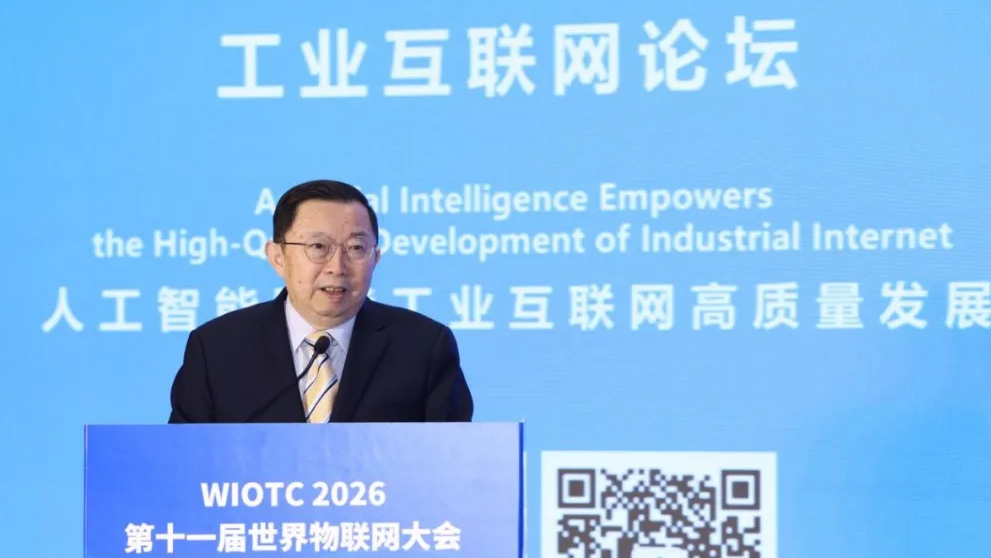
In his remarks, Xu Ningning, Chief Commercial Expert for China-ASEAN relations, stated that artificial intelligence and the industrial internet are profoundly transforming traditional industrial forms, accelerating regional economic and trade cooperation from conventional trade in goods toward coordinated development of industrial, supply and innovation chains. The continuous dividends of RCEP and the accelerated implementation of Version 3.0 of the China-ASEAN Free Trade Area create favorable conditions for in-depth cross-border industrial integration.
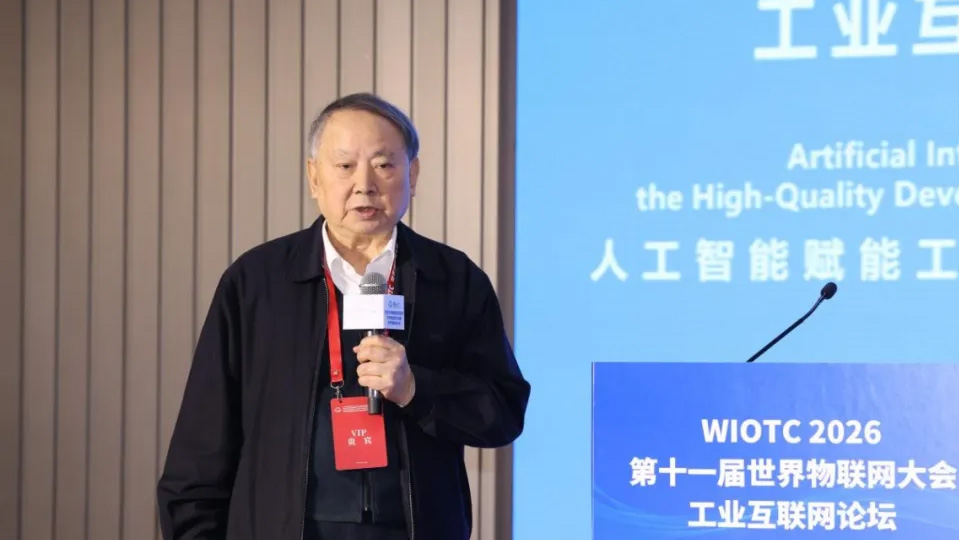
During the keynote session, multiple academicians and authoritative industry experts delivered forward-looking reports. Shen Changxiang, Academician of the Chinese Academy of Engineering presented a report entitled Building a Secure and Trusted Foundation for the Industrial Internet with Autonomous Trusted-Computing AI Products. He proposed establishing a security-trusted guarantee system built on autonomous trusted computing (Trusted Computing 3.0), to realize full-process computing security-trustworthiness and active immunity at system level.
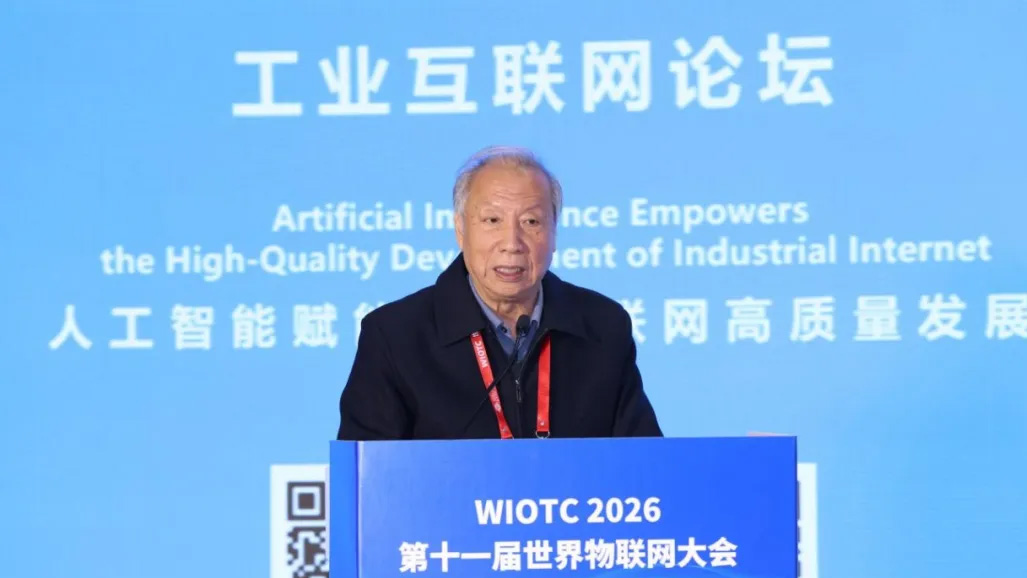
Zhao Qinping, Academician of the Chinese Academy of Engineering delivered a special report titled Virtual-Physical Integration: Driving the Development of Internet 3.0, systematically illustrating the technological evolution from VR 1.0 to VR 2.0. He pointed out that virtual-physical integration constitutes the core feature of Internet 3.0. Scenarios such as digital twins, metaverse and embodied-intelligence training grounds require collaborative support from new-generation network architectures, 5G/6G, AI, VR and other technologies.
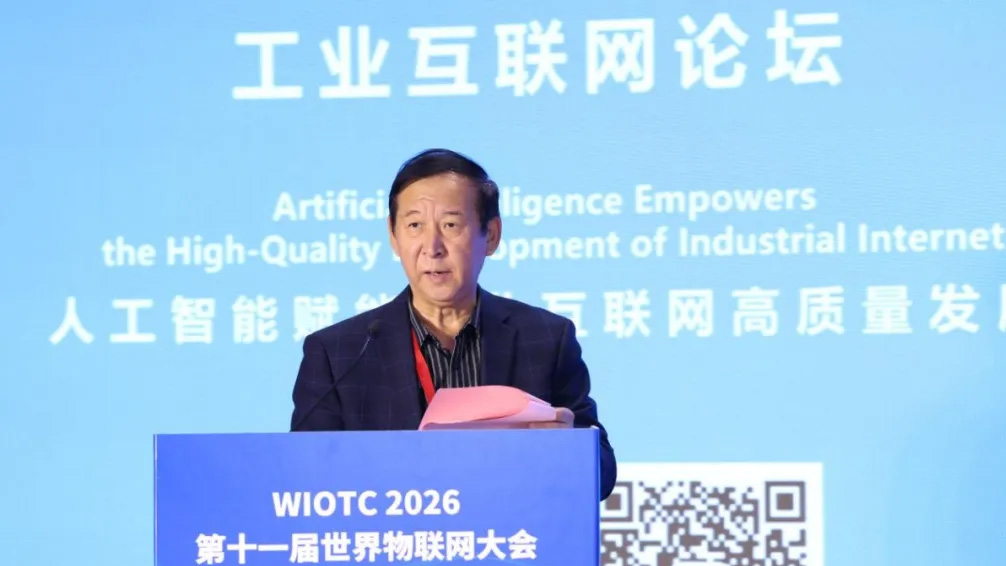
Yu Hongjun, Former Vice-Minister of the International Department of the CPC Central Committee, gave a keynote report Activating Data Elements to Empower High-Quality Industrial Development. He stressed the need to improve foundational data institutions, reinforce data infrastructure and foster the data-industry ecosystem, so as to drive the transition from “available data” to “maximized value from data”.
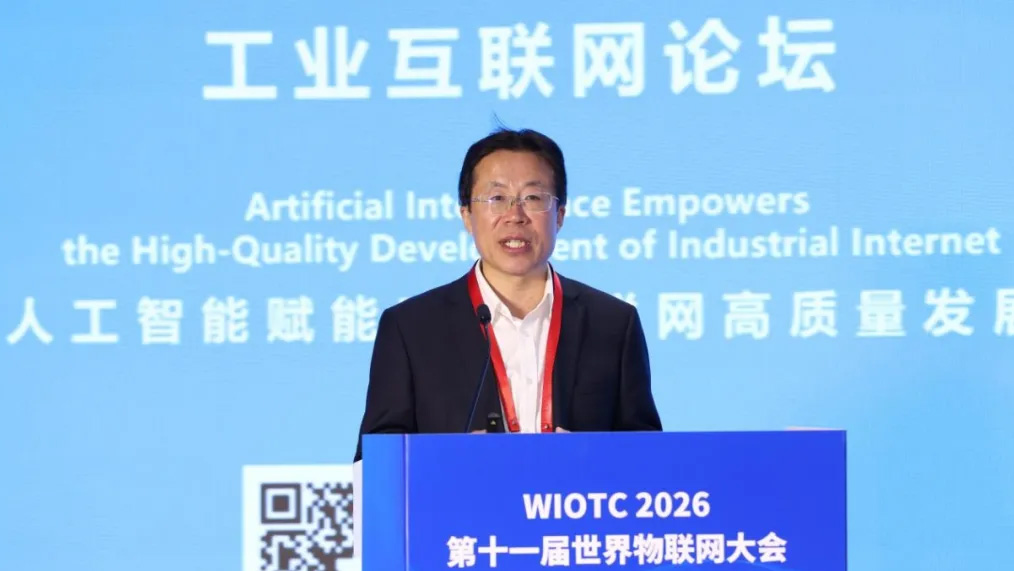
Lu Chuncong, President of the CAII, delivered the keynote report Key Tasks for Advancing the Industrial Internet. He systematically outlined six key tasks for advancing industrial internet. First, developing intelligent equipment; second, constructing digital-intelligent infrastructure; third, promoting industrial connectivity; fourth, building high-quality industrial datasets; fifth, advancing industrial AI agents; sixth, erecting industrial security-protection barriers.
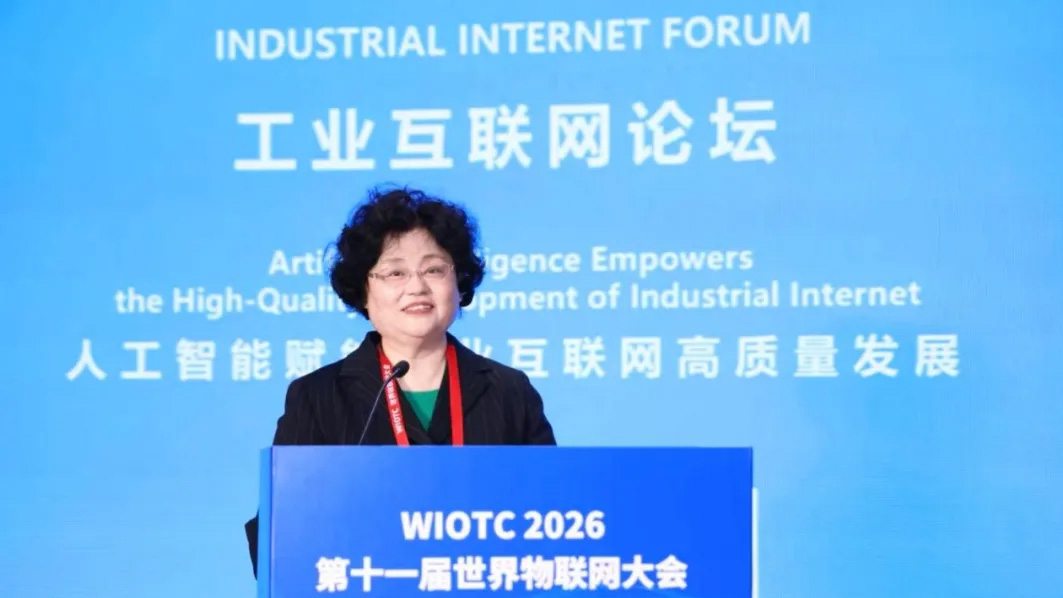
Zhang An’an, Secretary-General of the CIITA, released the Excellent Cases Collection for AI-Empowered High-Quality Industrial Internet Development. The Collection compiles 69 real-world practices from central SOEs, local SOEs and specialized and sophisticated enterprises, covering safe production, intelligent inspection, industrial large models, edge computing, trusted industrial security, smart shipping, rail transit, new energy industries, smart manufacturing and other sectors. It aims to provide referential practical templates for manufacturing enterprises and facilitate cross-industry, cross-domain replication and promotion of outstanding achievements.
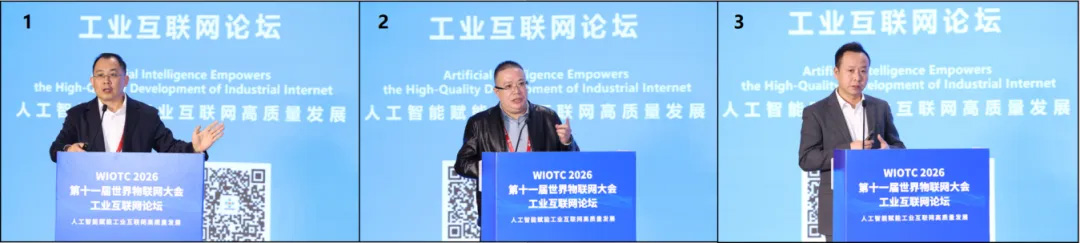
In the case sharing segment, Yu Xichao, Deputy Director of the Science and Technology Committee at CEC Industrial Internet Co., Ltd., unveiled a software-hardware integrated mobile emergency intelligent power-management system. The product achieves a 45% reduction in overall weight and 30% reduction in volume, supports 3-minute rapid assembly and multi-unit parallel capacity expansion, and is equipped with cloud-edge integrated intelligent scheduling and AI predictive maintenance. Wang Yankang, General Manager of the Beijing Branch of Jingxin Technology Co., Ltd., demonstrated innovative pathways and multi-scenario application outcomes for resolving the pain points among central and local SOEs via trusted data links. Wei Qing, Executive Vice-President of Beijing XYLink Technology Co., Ltd., shared on-site practices of AI-empowered video command and dispatch systems for mine safety production. The system maintains smooth video output without screen distortion under 60% packet-loss conditions, and can be replicated for high-risk industries including hazardous-chemical production and metallurgy.
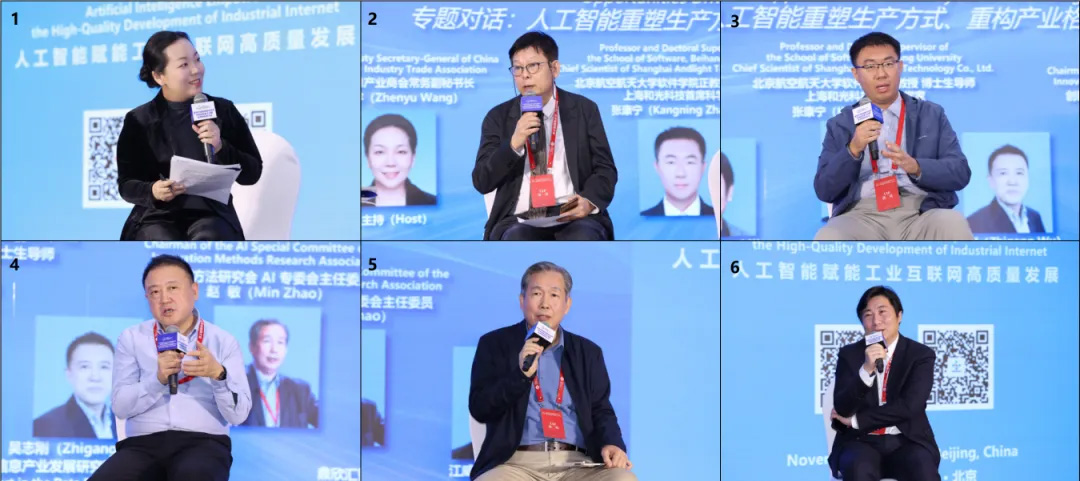
The special dialogue was moderated by Wang Zhenyu, Executive Deputy Secretary-General of the CIITA. Participants including Mi Xiaoyu, Zhang Kangning, Wu Zhigang, Zhao Min and Jiang Wei held in-depth exchanges around the theme “How Artificial Intelligence Reshapes Production Modes, Industrial Landscape and Major Investment Opportunities”. The speakers elaborated from five dimensions, including underlying hardware, software architecture, data elements, industrial-transformation methodologies and enterprise-level implementation practices. They reached consensus that the AI-powered real-economy foundation lies in self-controllable underlying hardware, its soul resides in AI-native software architectures, its fuel is securely and orderly circulated data, and its value manifests in scenario-based applications aligned with industrial processes. In the next one to three years, higher certainty will be seen in fields such as electronics-photonics convergence and edge-computing chips, AI-native software architectures, trusted data spaces, industrial knowledge engineering, action-oriented intelligent agents, and vertical-sector AI industrial applications. Meanwhile, vigilance is needed against homogeneous competition in consumer-grade computing power, pure-algorithm projects decoupled from industrial mechanisms, and “pseudo-AI” projects. For industry-university-research collaboration, universities should encourage students to engage with practical industrial settings, while enterprises increasingly value practical competence and engineering experience among talents.
This Forum successfully built a high-end exchange platform for deep integration between the industrial internet and artificial intelligence. It further defined an industrial development pathway driven by data elements, underpinned by a secure-trusted foundation, and led by scenario-oriented applications. Participants agreed to take this Forum as an opportunity to deepen pragmatic cooperation, share achievements in digital, networked and intelligent development, and jointly advance high-quality development of industries and the digital economy.

The World Internet of Things Convention (WIOTC)
is an IoT-digital-economy international organization that is innovative and nonprofit. It is also a nongovernmental organization included in the registry database of the United Nations ECOSOC.
The name of the organization is also the name of our leading annual conference with high-end and cutting-edge brand - WIOTC as an international event.
Copyright © 2015-2026 WIOTC.org, All Rights Reserved. 世界物联网大会 版权所有