
WIOTC official news feed, bringing you real first-hand information
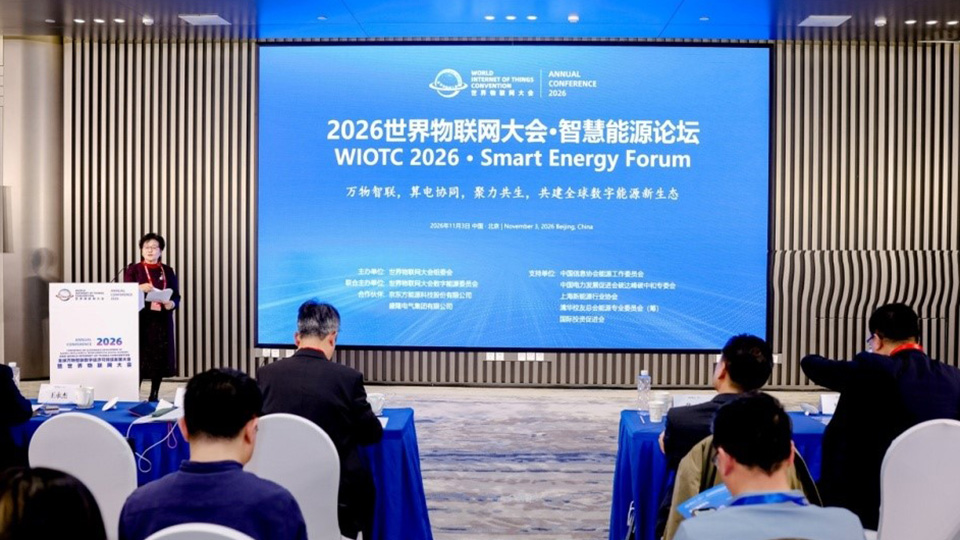
On November 3, the 2nd Smart Energy Forum of the WIOTC 2026 opened at the Zhongguancun Exhibition Center in Beijing. Under the theme “Intelligently Interconnected World, Computing Power-Power Grid Synergy, Co‑Growth for Shared Benefits, Building a Global New Digital Energy Ecosystem”, the Forum brought together experts from energy, communications, artificial intelligence and financial sectors. Participants conducted thorough research on core agendas including new‑type power grids and computing power‑power grid technologies, cross‑border AI computing‑power collaboration, international standards and green digital finance. At this international event, Chinese scholars put forward for the first time the concept of TokenNet (Token‑Oriented Internet), systematically expounding its theoretical framework and engineering architecture, and called on industry‑university‑research communities to jointly advance standard setting for "two‑phase routing" and "physical circuit‑breaking". The Forum also released the Digital‑Energy White Paper 2026——IoT‑Intelligence Fusion: Ushering in a New Era for Digital Energy, and formally kicked off compilation work for the report Intelligently Interconnected World--Empowering Energy Digital‑Intelligent Transformation with Agent and Token (2027), outlining actionable pathways for realizing the new digital energy ecosystem.
Hosted by the WIOTC Organizing Committee and co‑sponsored by WIOTC Digital Energy Commission, the Forum secured partnership support from BOE Energy and Shenglong Electric Group. Supporting institutions included the Energy Working Committee of the CAI, the Carbon‑Peaking & Carbon‑Neutrality Special Committee of the CEPPC, the Shanghai New‑Energy Industry Association, the Energy Professional Committee (Preparatory) of the Tsinghua Alumni Association, and the Global Investment Council. He Qiang served as Forum Chair, Cao Junwei, Zhao Fengyun and Lin Chengzhen as Co‑Chairs, and Zhu Xinyuan as Chief Planner.
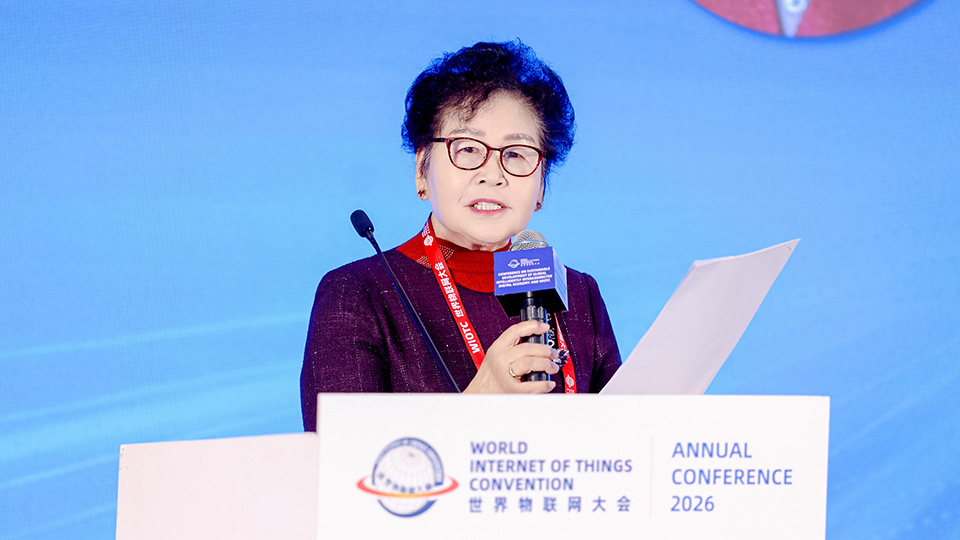
Zhu Xinyuan, Expert of the WIOTC Digital Energy Commission and Senior Expert of SNEIA Expert Committee, presided over the opening session. She explained that Forum planning aligns with the Convention’s overall theme and responds to UN global digital cooperation and sustainable development goals. Centered on three directions, including new‑type power grids and computing power-power grid technologies, cross‑border AI computing‑power collaboration and Token globalization, and international standards and green digital finance, the event explores integration practices between digital technologies and the energy‑power industry. It aims to break through collaborative barriers for global energy computing-power infrastructure, power grids and carbon assets, deepen cross‑border digital energy cooperation, advance global carbon neutrality, and foster an open and sustainable global digital energy economic future.
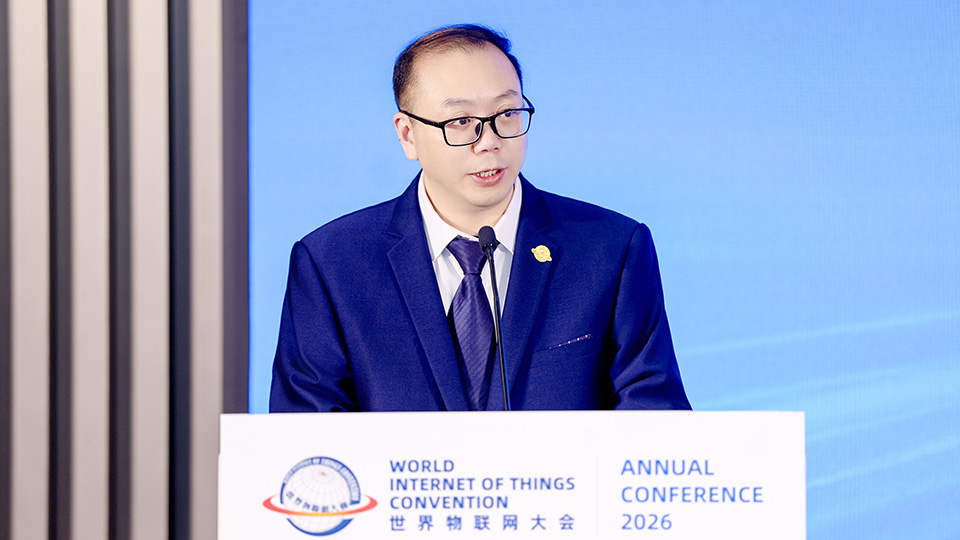
In his welcome address, He Qiang, Vice Chairman and Secretary-General WIOTC Executive Committee, extended greetings to attendees. He noted that the global energy sector is undergoing industrial transformation driven by IoT and AI. Deep integration between IoT and energy systems represents a shared priority for major global economies. Energy is intertwined with all industries, and “digital‑intelligent energy” forms the core of digital‑economic transition. He expressed hope for idea exchanges, innovation‑result sharing and tangible industrial cooperation among participants, so as to advance UN Sustainable Development Goals, build a community with a shared future for mankind, spread digital‑economic dividends worldwide, and facilitate high‑quality green‑intelligent development of the energy industry.
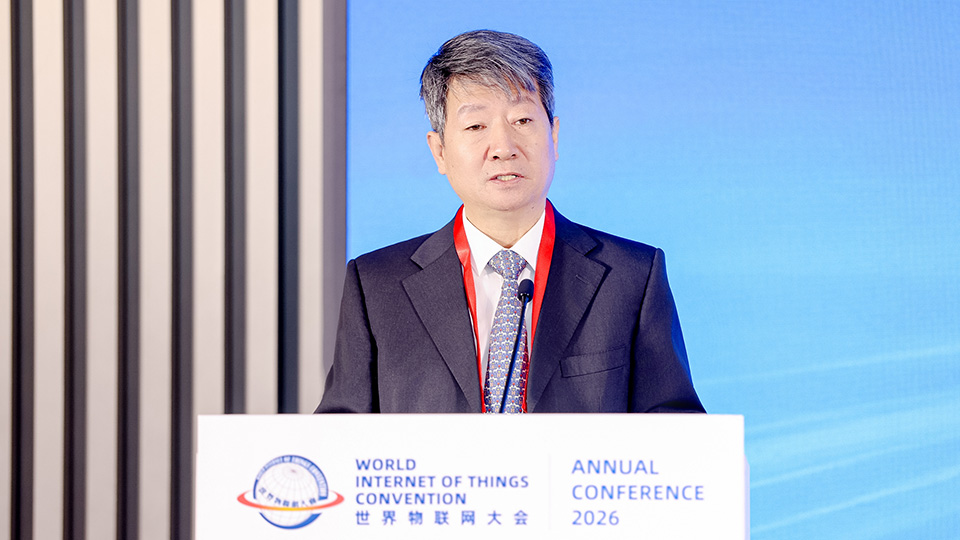
Liang Zhipeng, Technical Committee on Renewable Energy of China Energy Research Society (CERS), delivered thematic remarks. He stated that China is set to preliminarily establish a new type energy system and new type power system during the “15th Five‑Year Plan” period. Amid large‑scale new energy expansion, digital‑intelligent technologies are urgently required to reshape energy systems. As the “AI+Energy” Initiative comes into force, AI and energy have evolved from one‑way support toward two‑way empowerment, with wide‑ranging deployment in scenarios including power‑generation forecasting and equipment operation‑maintenance. He pointed out multiple bottlenecks hindering energy digital‑intelligent transformation: fragmented high‑quality datasets, poor matching between new‑energy generation output characteristics and power‑consumption profiles of computing‑power loads, insufficient market reflection of flexible regulation value of adjustable loads, and inadequate system integration and operational capabilities among energy enterprises delivering comprehensive smart energy services. Four recommendations were raised: accelerate deep integration between energy and digital‑intelligent technologies and drive enterprises to transform into comprehensive smart energy service providers; promote collaborative innovation between AI and power market mechanisms to aggregate adjustable resources for multiparty win‑win outcomes; coordinate the layout of computing‑power resources and new energy capacity to achieve two‑way empowerment between green power and digital technologies; embed digital‑intelligent technologies into energy carbon management, and build complete chains for carbon footprint accounting and digital carbon‑asset management. He commended the Forum’s focus on computing power‑power grid synergy and “AI+Energy”, expecting consensus building and practical outcomes to support digital‑intelligent upgrading of the energy sector.
Wang Yongjie, Chairman of the Energy Working Committee of the CAI, delivered opening remarks. He observed that intelligently interconnected world is driving energy system evolution from device interconnection toward data element‑oriented management. The industry should seize opportunities brought by the dual‑driven Agent‑Token mechanism to build an open and collaborative global new digital energy ecosystem. He purposed that the essence of intelligently interconnected things lies in converting physical-energy flows into data‑element flows featuring definable ownership, governability and tradability. Green electricity, green certificates, carbon quotas, auxiliary services and virtual power plant response capacity essentially represent equity certificates after data ownership confirmation. Energy digitalization is advancing from “visibility” to “accurate calculation, clear attribution and fluid circulation”, while ownership definition and rule setting constitute primary prerequisites for element‑oriented management. He believed that Energy Agents are evolving from single‑point auxiliary functions toward multi-agent collaborative dispatching, supporting minute‑level decision‑making and autonomous operation‑maintenance. Tokens serve as metering vouchers for computing‑power output and green‑value generation, enabling bidirectional anchoring between physical electricity volume and digital rights‑and‑interests. Stakeholders should build a five‑in‑one data‑infrastructure framework covering “institutions, standards, platforms, security and evidence preservation”, reshape roles of enterprises, aggregators and standards‑setting organizations, and enable safe, willing and feasible data circulation. He empathized China’s large‑scale practical experience with virtual power plants and UHV dispatching constitutes exportable public goods, yet mutual recognition of standards forms a prerequisite for global outreach. He called for constructing a global digital‑energy community based on ubiquitous IoT infrastructure, mutually‑recognized standards and interconnected market mechanisms.
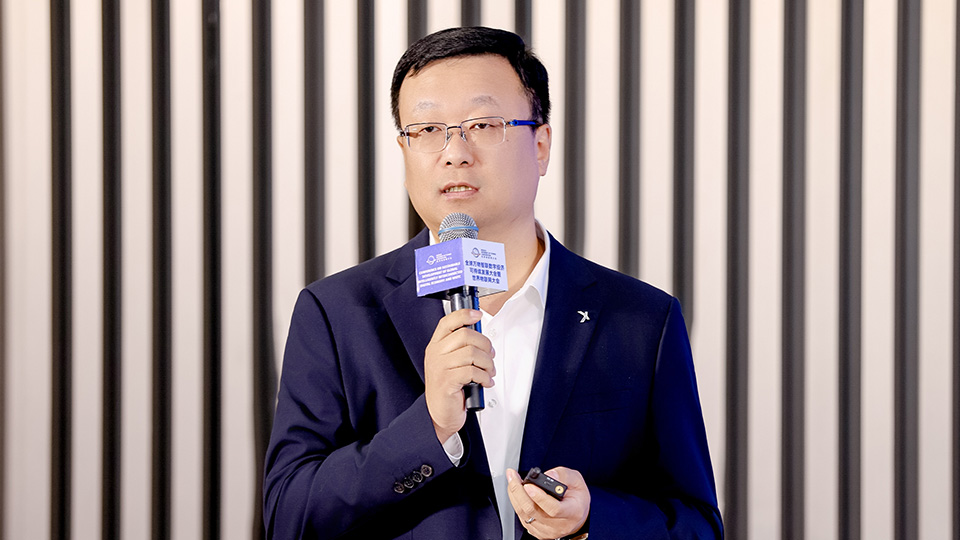
Ma Liang, Chairman of BOE Energy, gave the keynote speech Energy‑Carbon Synergy: AI+Energy‑IoT Technologies Driving Industrial Green Transition. He argued that green low carbon transition is not merely an environmental agenda but also an industrial energy security issue. In the digital‑intelligent era, AI acts as a core variable for green transformation: surging computing power‑driven power loads amplify the value of green power and facilitate large scale new energy development. At the same time, high‑proportion integration of renewable energy alongside growing computing‑power and social‑power‑consumption demands exacerbates supply‑demand balancing pressure on power systems. Proactive corporate green transition can empower power grids while generating corporate benefits, creating a win-win situation. He said that BOE pursues sustainable development and targets operational carbon neutrality by 2050 through six pathways, including green governance, green products, green manufacturing, green circularity, green investment and green initiatives. As a BOE subsidiary specializing in zero‑carbon comprehensive energy services, BOE Energy draws on high‑end‑manufacturing construction and O&M experience to formulate a five‑dimensional integrated zero‑carbon park and energy‑carbon collaborative implementation pathway: clarify carbon baselines through diagnostics and formulate zero‑carbon roadmaps; realize source‑side decarbonization via wind‑solar‑storage‑charging systems and heat pumps; advance process‑oriented carbon reduction for auxiliary systems such as air conditioning, power supply, water treatment and gasification; close the final gap via end‑of‑chain negative‑carbon measures; and establish long‑term closed‑loop energy‑carbon governance through smart monitoring. Built on BOE Energy’s self‑developed BES Smart Energy Management System, the framework leverages AI+energy‑IoT technologies to construct an integrated digital view of energy and carbon flows, supporting minute‑level monitoring and visualization of energy consumption and carbon emissions. It helps clients maximize green power utilization, optimize electricity‑carbon procurement costs and fine‑tune energy consumption, delivering comprehensive benefits of revenue growth and cost reduction while advancing clients’ zero‑carbon transition.
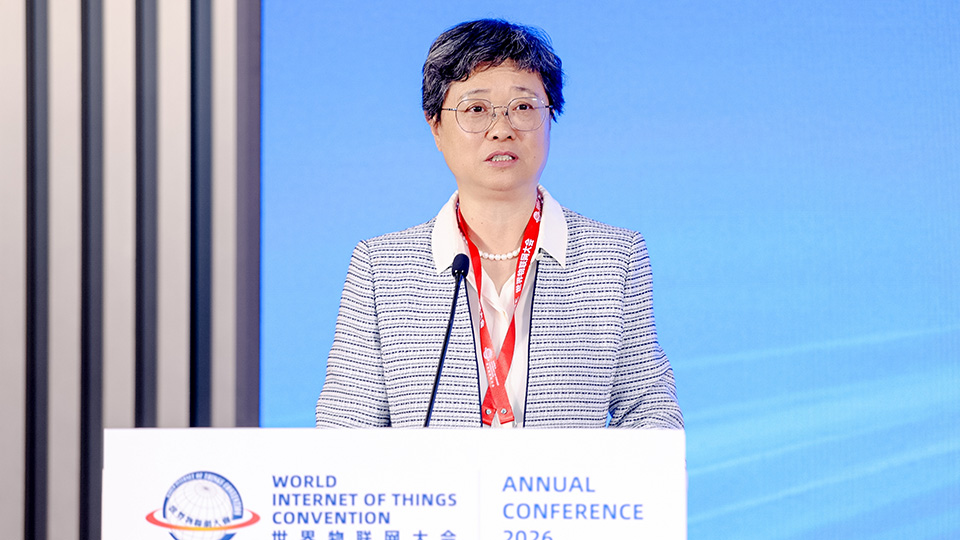
Zhao Fengyun, Chief Expert of the China Energy Research Society, moderated Theme 1: New Type Power Grids and Zero‑Carbon Technologies: Computing Power‑Power Grid Synergy. She pointed out that new type power system construction relies on deep embedding of artificial intelligence and digital technologies, and computing power‑power grid synergy acts as a key lever for grid‑security assurance and zero‑carbon transition.
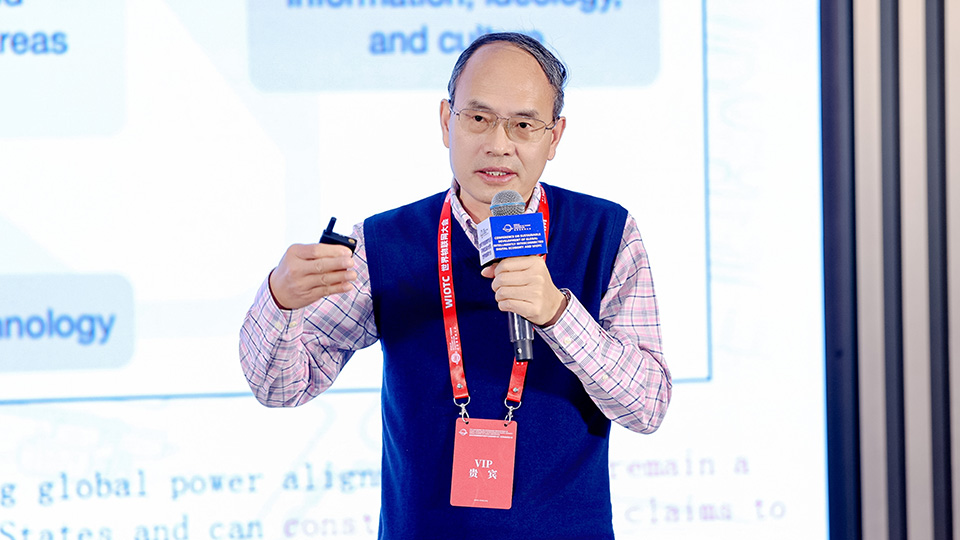
Zhang Jinbin, Deputy Chief Engineer of the EPPEI, presented Reflections on High‑Quality Development of “AI+ Electric‑Power Industry”. He stated that AI serves as a new engine for global‑economic growth and an accelerator for conversion between old and new driving forces. Regarded as the fourth production factor alongside capital, labor and land, AI represents one of the most influential general purpose technologies in human history. Global energy development revolves around two core themes: energy‑security independence and green low‑carbon upgrading. AI and electric‑power industries are mutually complementary and bidirectionally empowering: the power‑energy sector lays solid energy foundations for rapid AI advancement, while AI greatly facilitates the construction of high penetration renewable energy power systems and underpins efforts to build a powerful energy nation. Success for “AI+ Electric Power” hinges not only on technological progress but also coordination across human resources, corporate culture, strategic planning, process management and other dimensions. For AI deployment in electric‑power critical national infrastructure, value creation must be prioritized alongside three core AI application principles: first, maintain “human in the loop” governance rather than “human on top” oversight; second, distinguish deterministic versus probabilistic characteristics of AI outputs; third, adhere to AI interpretability requirements.
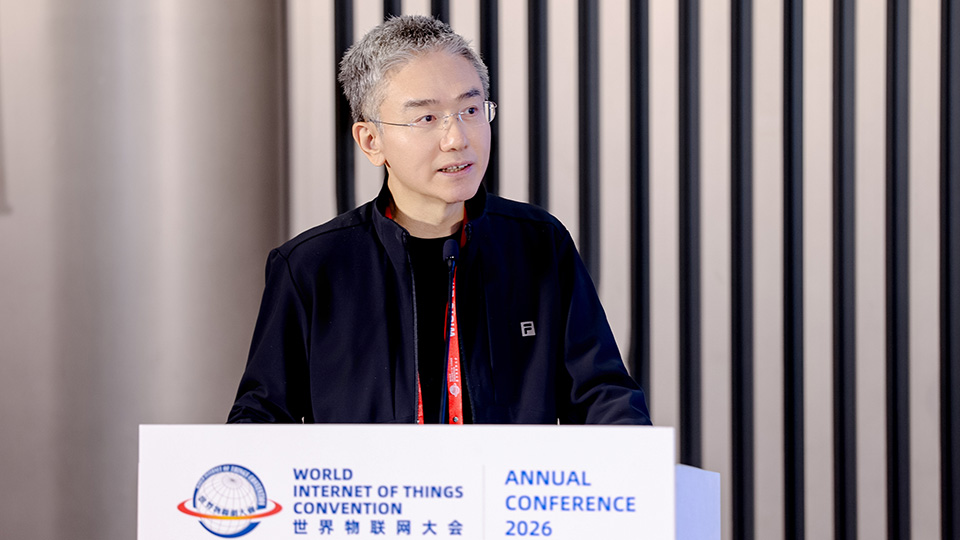
Cao Junwei, Research Fellow of BNRIST of Tsinghua University and Chief Scientist of Beijing Zhizhong Energy Internet Research Institute, delivered the keynote Intelligently Interconnected World: Agents and Tokens Empowering Energy Digital‑Intelligent Transformation. He sorted out technological evolution trajectories spanning the Internet, Internet of Things and Intelligent‑Connected Things, highlighting inevitable convergence among the three. Centered on virtual and embodied intelligent agents, cross‑domain collaboration and autonomous decision‑making without human intervention. He pointed that AI Agents and Tokens are triggering information technological revolutions. It is critical to learn from intelligent‑agent technologies to develop specialized energy‑industry agents, deliver killer‑use‑case applications, deploy hybrid centralized‑distributed intelligent computing centers, and enable energy digital‑intelligent transition. The Tsinghua research team has long devoted efforts to AI+energy research, demonstration projects and industrial implementation, and welcomes extensive collaboration.
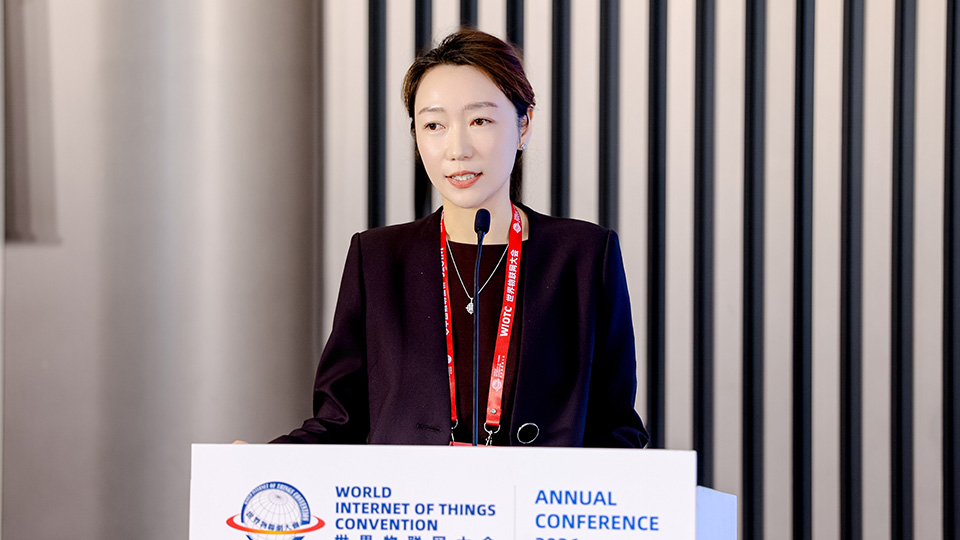
Yang Fang, Deputy Director General of Economic & Technology Research Institute of GEIDCO, gave the presentation Development Status and Implementation Pathways for Computing Power‑Power Grid Synergy. She argued that in the intelligently interconnected era, power infrastructure and computing power infrastructure rank among society’s most critical systems. Strengthening computing power with power addresses reliable, green and economical power supply for computing power centers. Boosting power‑system performance with computing power leverages flexible reconfiguration of computing power loads to alleviate renewable‑energy‑consumption challenges, enhance power‑system security and drive cost‑efficiency gains. Global countries primarily focus on the former dimension of computing power‑power grid coordination. While China’s new type power‑system construction guarantees power supply for computing power facilities, cross‑industry collaboration can unlock greater domestic potential for computing power‑power grid synergy. Real world implementation should follow principles of hierarchical‑categorical governance, prioritizing feasible tasks while adapting to local conditions.
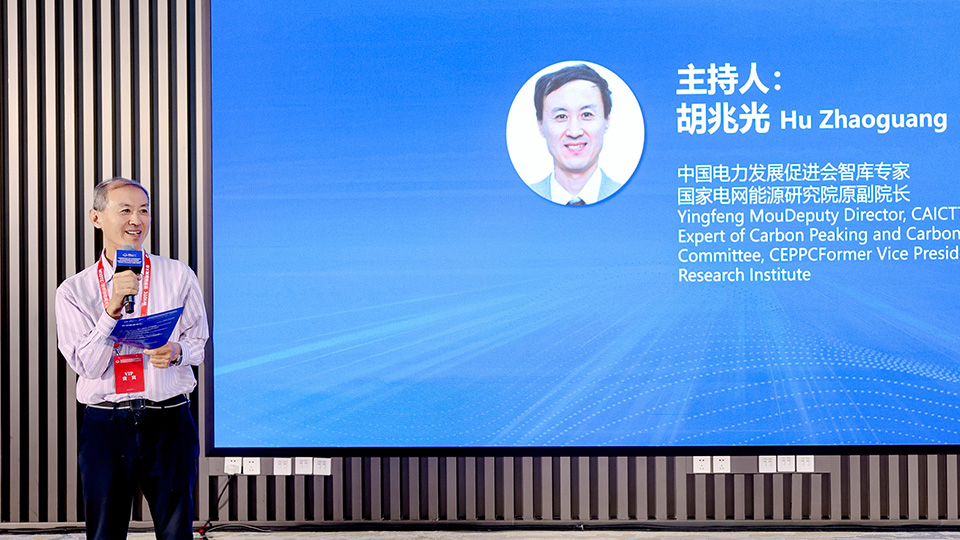
Theme 2, Dual‑Driven Agents & Tokens: Fostering a Shared Growth New Digital‑Energy Ecosystem, was moderated by Hu Zhaoguang. He noted that AI Agents and Token technologies form important technical underpinnings for intelligently interconnected world, delivering innovative solutions for industrial energy systems and zero‑carbon parks.
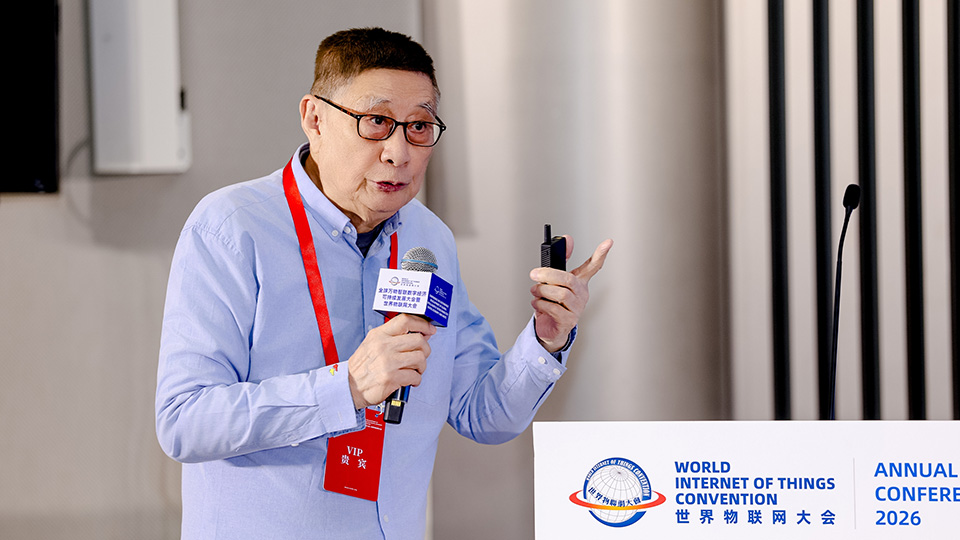
Lin Chengzhen, Vice Chairman of WIOTC Digital Energy Commission and Senior Advisor of Carbon Peaking and Carbon Neutrality Committee of CEPDPA, delivered TokenNet: The Token‑Oriented Internet—Next‑Generation Semantic Foundation for Intelligently Interconnected World. This marked the global forum debut of the TokenNet concept. He elaborated its theoretical system and engineering architecture, proposed a “silicon‑based nervous system” approach to resolve AI physical security challenges, and called on government‑industry‑university‑research stakeholders to jointly advance standards for “two‑phase routing” and “physical circuit‑breaking”. He identified three major fault lines restricting AI expansion into physical world scenarios: network aphasia (protocol layers lack awareness of business intent), computing power-power grid dissonance (misalignment between computing power layout and green‑power supply), virtual‑physical fragmentation (computational errors in digital space may trigger tangible physical risks). A three‑phase standardization roadmap was presented: initiate gateway technology specification standard setting within 12 months; launch dual‑domain pilots covering computing power hubs and virtual power plants within one to three years; introduce physical circuit‑breaking and AI‑alignment mechanisms into international standard discussions within three to five years.
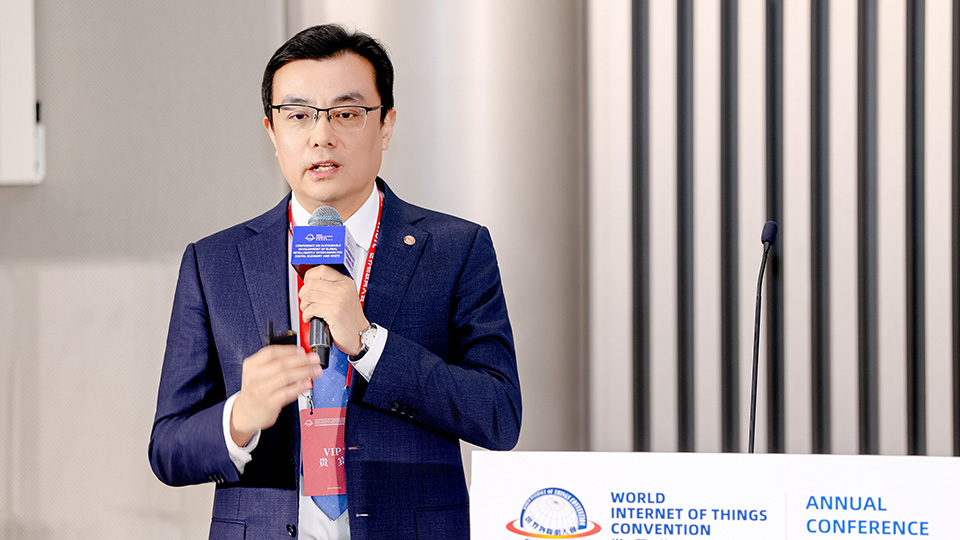
Li Dong, Director of Rockwell Automation Innovation Institute, presented Agent‑Driven Industrial Energy Closed Loop Operations and Computing Power‑Power Grid Synergy. He explored pathways for deep integration between digital technologies and the energy industry with government‑industry‑university‑research partners. Addressing industrial challenges such as energy volatility, system fragmentation and suboptimal energy utilization efficiency, he explained how AI Agents link production, energy and business decision‑making through closed-loop perception, analysis, decision and execution cycles, converting data from “visibility” to “actionability”. Optimizing matching between computing power demand and energy‑supply facilitates efficient coordination among sources, grids, loads, energy‑storage assets and production systems, delivering SEEE sustainability values with safety, environmental‑friendliness, energy‑saving and efficiency.
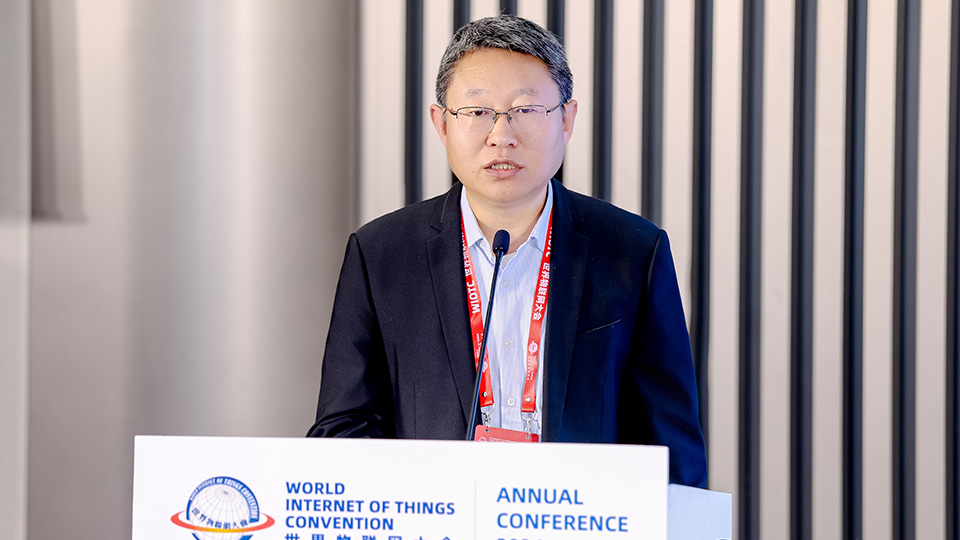
Wu Jinghai, Senior Expert of Smart Investment Business Group MingYang Smart Energy Group Co., Ltd., gave the report Digital‑Intelligence‑Driven Green Power Renewal: Mingyang’s Exploration and Practice for Zero‑Carbon Parks. Zero‑carbon park development entered the operational era in 2026. As relevant policies and standards roll out and construction scales expand, industrial parks represent China’s main battlefield for carbon reduction. Nevertheless, four‑dimensional coordination challenges spanning energy consumption, carbon emissions, costs and market mechanisms still constrain park green transition. To overcome these pain points, Mingyang developed the Mingxi Smart Energy Platform built on energy‑IoT advances. Adopting a cloud‑edge‑end architecture with a unified technical foundation, it integrates four modules: MyCarbon energy‑carbon management, MyEnergy source‑grid‑load‑storage integrated control, MyVPP virtual‑power‑plant functions and MyTwins digital‑twin capabilities. The platform evolves from a standalone tool toward multi‑agent collaborative intelligence, forming end‑to‑end closed‑loop workflows covering resource aggregation, intelligent forecasting and market monetization.
Theme 3: Global Markets, Standards and Green Finance resumed under the moderation of Zhu Xinyuan. She emphasized that digital energy development requires not only technological innovation but also support from cross‑border investment, green finance products and standardized systems. This special session focused on three areas: cross‑border AI‑computing power infrastructure, sustainable finance products and digitalized electric‑power standards. The finance track was newly expanded this year to complete the full‑chain driving framework for digital energy advancement.
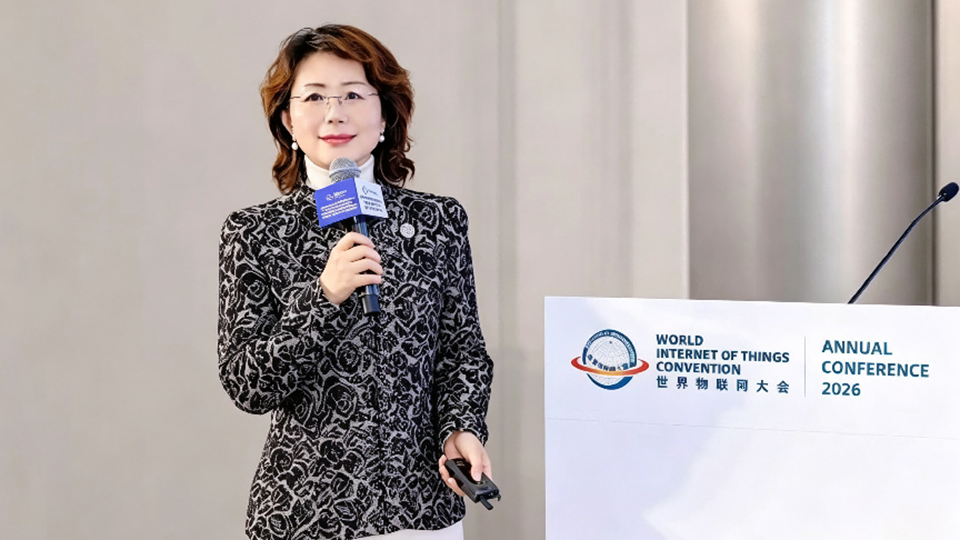
Liu Linna, Vice Chair & Secretary-General of the Global Investment Council, delivered Analysis of Cross‑Border Investment Mechanisms for Green Infrastructure Supporting Globalized AI‑Computing Power Layout. Against the backdrop of worldwide AI‑computing power expansion, cross‑border investment in supporting green energy infrastructure faces new challenges; traditional new energy investment evaluation models are no longer applicable. Tripartite coupling among computing power demand, energy resources and regulatory compliance calls for innovative composite cross‑border investment mechanisms. To mitigate risks ex‑ante, GIC has established five pre‑evaluation checkpoints: computing power load verification, full‑lifecycle chip‑compliance assessment, cross‑border data governance review, energy‑land‑grid‑connection guarantee assessment, and financing‑exit‑closure validation.
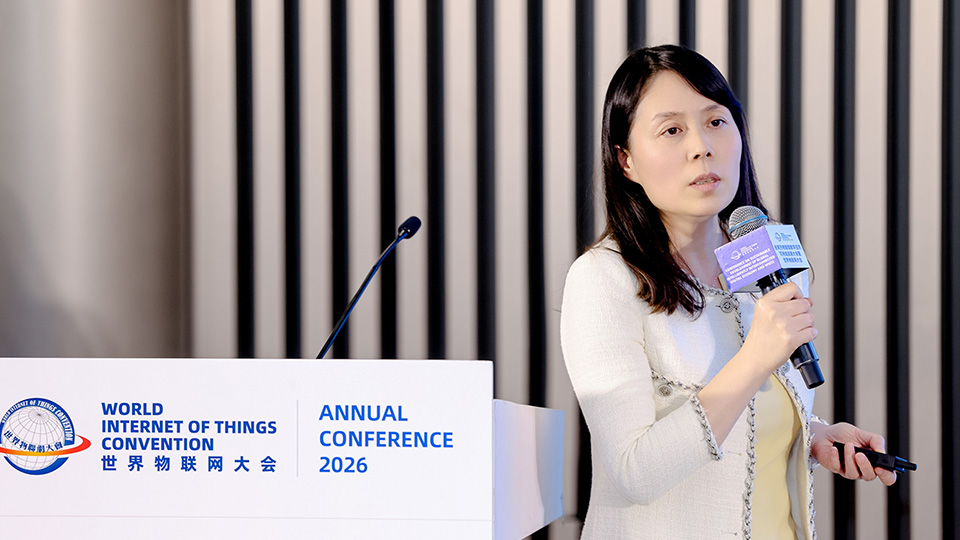
Xu Hongfeng, Research Professor at the Chinese Academy of Social Sciences and Deputy Secretary-General of Policy and Development Committee of China Association of Environmental Protection Industry presented Sustainable Finance Product Innovation Supporting Digital‑Energy Development. She systematically reviewed latest sustainable finance practices serving digital‑energy industries. With nationwide advancement of the “East Data‑West Computing” project, green‑financial products are penetrating data‑center and intelligent‑computing center sectors, forming diversified financing‑supply systems. Deep coordination between green finance, transition finance and central‑bank policy instruments establishes full‑chain low‑cost funding guarantees for high‑quality digital energy development, strongly supporting national dual‑carbon goals.
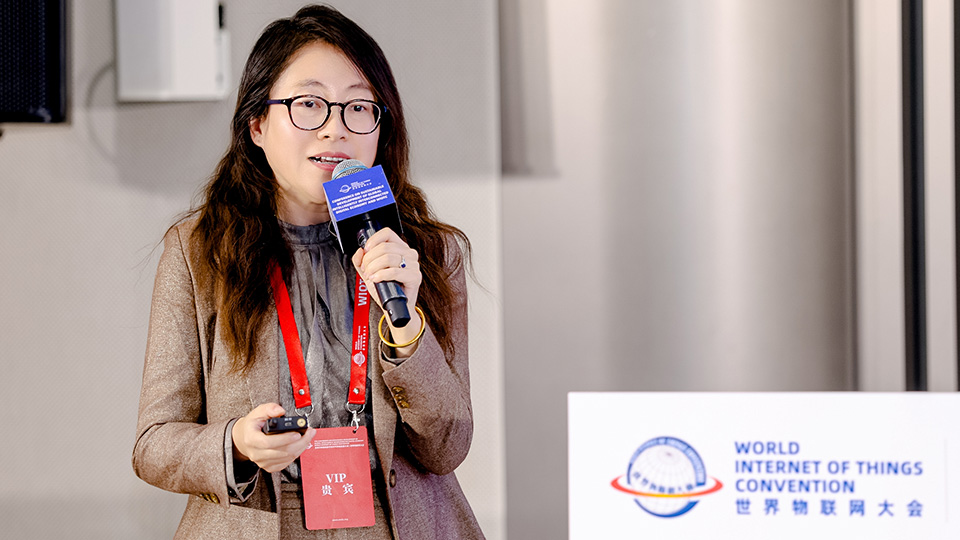
Wang Sining, Deputy General Manager of Beijing SGITG Accenture Information Technology Co., Ltd., gave the presentation Innovative Development and Real‑World Practices for Digitalized Electric Power Standards. As lead of the State Grid Corporation of China’s new type power system digital‑standards research team, she shared cutting‑edge progress and innovations: global digital‑standards development has entered a new phase; State Grid built the electric‑power sector’s first enterprise‑level digital‑standards repository; and the research team developed the SG‑SMART model, proposing directions to construct “plug and play”, interpretable and traceable grid‑standards rule engines.
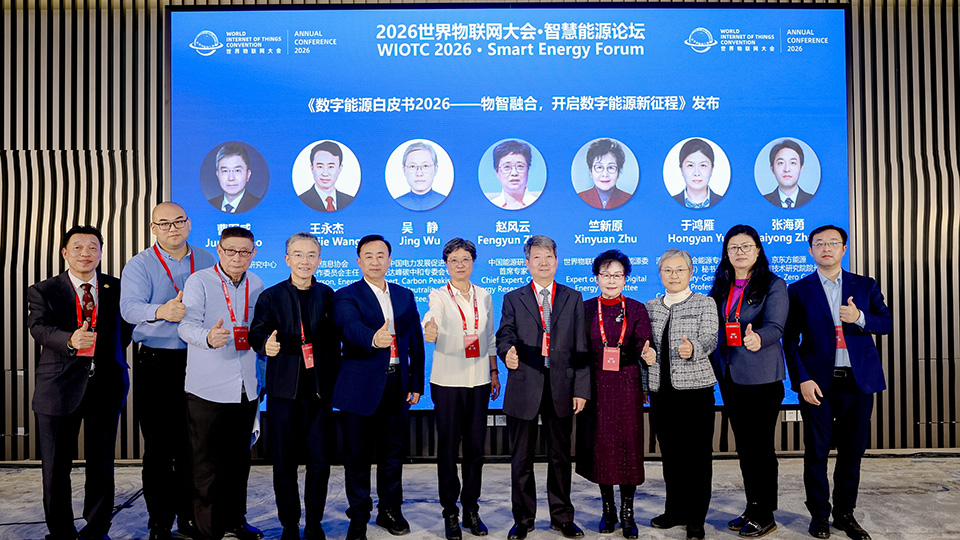
A major deliverable of the Forum was the release of the Digital‑Energy White Paper 2026——IoT‑Intelligence Fusion: Ushering in a New Era for Digital Energy. Compilation work for the report Intelligently Interconnected World--Empowering Energy Digital‑Intelligent Transformation with Agent and Token (2027) was also officially launched. Distinguished guests including Liang Zhipeng, Cao Junwei, Wang Yongjie, Wu Jing, Zhao Fengyun, Zhu Xinyuan, Yu Hongyan and Zhang Haiyong witnessed the release and launch ceremony.
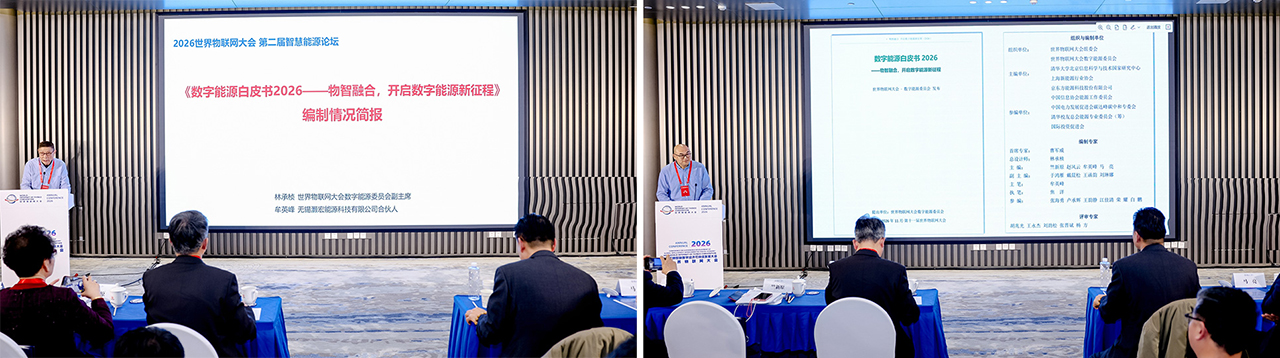
Lin Chengzhen, Chief Designer of the White Paper, stated that following his presentation at the launch ceremony for the 2026 Annual Report The Digital Energy Revolution Driven by the Internet of Everything and Intelligent Connection during the first Smart Energy Forum in 2025, where he laid the groundwork for top-level design, technical pathways, core technologies, standards development and international cooperation. The drafting team has conducted in-depth research into industrial ecosystems and application scenarios. Centering its efforts on AI + Energy and the digital intelligence of energy, the team further narrowed its focus to the new power system, AI Agents, the Internet of Things and Tokens. The drafting team comprises a panel of experts from government, industry, academia, research institutions and financial organizations across the sector, including scholars and engineering implementation specialists spanning senior, middle and young generations. He argued that amid the current cutthroat competition within the industry, it is imperative to elevate the quality of industry services by compiling research reports, white papers and blue papers to consolidate industry consensus and carry out continuous iterations. Exploring innovative thinking for the sector constitutes a tremendously significant, arduous and necessary undertaking. In 2026, we stand at the intersection of the Internet of Everything and Intelligent Connection and the integration of physical entities and intelligence. This white paper delivers our systematic response to this starting point, and we hope it can serve as a working document for all stakeholders advancing digital energy initiatives. We welcome exchanges, comments and corrections from all parties. The compilation of Intelligently Interconnected World--Empowering Energy Digital‑Intelligent Transformation with Agent and Token (2027) has already commenced, with its official launch scheduled for 2027. We welcome you to join and participate in discussions at your convenience.
Mu Yingfeng, Lead Author of the White Paper and Partner at Wuxi Haohong Energy Technology Co., Ltd., commented that the energy industry is transitioning from “dumb” devices toward intelligence. IoT and AI are reshaping conventional energy systems by interconnecting distributed photovoltaic arrays, wind turbines and other energy‑generation assets, enabling system‑wide perception, computation, scheduling and trading. Fundamental shifts in industrial logic are underway: workflows evolve from “people searching for data” to “data proactively reaching users”; power system operation upgrades from conventional “generation follows load” to full‑domain source‑grid‑load‑storage intelligent interaction. Centered on the core philosophy of intelligently interconnected world, the White Paper goes beyond superficial device networking to build complete intelligent closed loops spanning perception, decision making, ownership definition and data circulation. It identifies five profound transformations sweeping the energy sector: shift toward flexible distributed energy production; realization of bidirectional grid interaction; comprehensive AI empowerment for industry governance; diversification of energy value streams; and elevation of energy data from auxiliary operational metrics to definable, quantifiable and balance sheet eligible core production factors. Development roadmaps and policy recommendations covering 2026 2030 are outlined. Centered on data elements, trusted data spaces and data assets, the White Paper promotes upgrading energy digitalization into national level infrastructure systems, underpinned by joint standards setting and market oriented cross border operations to support ubiquitous intelligence fusion implementation and provide practical evidence for digital energy development.
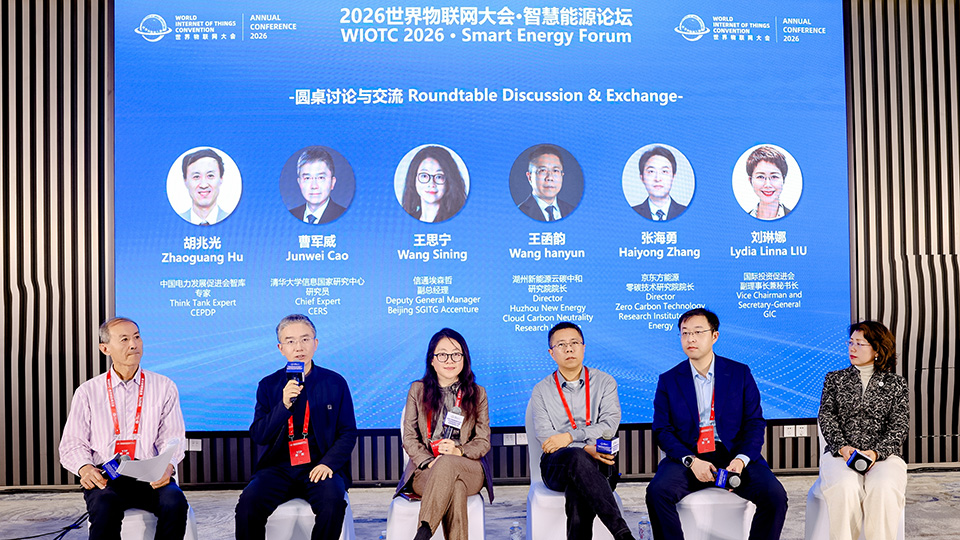
During the round‑table discussion session, participants Hu Zhaoguang, Cao Junwei, Wang Sining, Wang Hanyun, Zhang Haiyong and Liu Linna exchanged insights around topics including core factors and technologies for AI+energy and energy digital‑intelligent transformation, how Agents and Tokens deliver dual‑driven value, and critical pathways linking product carbon footprints to global markets.
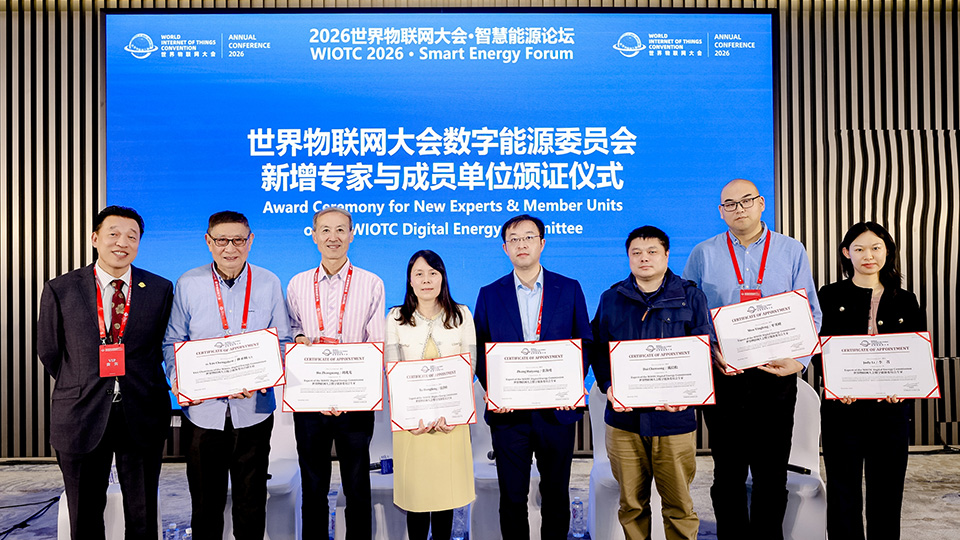
A certificate‑awarding ceremony was held for newly‑added experts and member entities of the WIOTC Digital Energy Commission. Vice‑Chairman Zhang Hua presented official certificates. Newly‑appointed experts include Lin Chengzhen, Hu Zhaoguang, Zhang Jinbin, Mu Yingfeng, Zhang Haiyong, Li Jing, Dai Chensong, Cai Yi and Xu Hongfeng; new member entities are BOE Energy and Shenglong Electric Group.
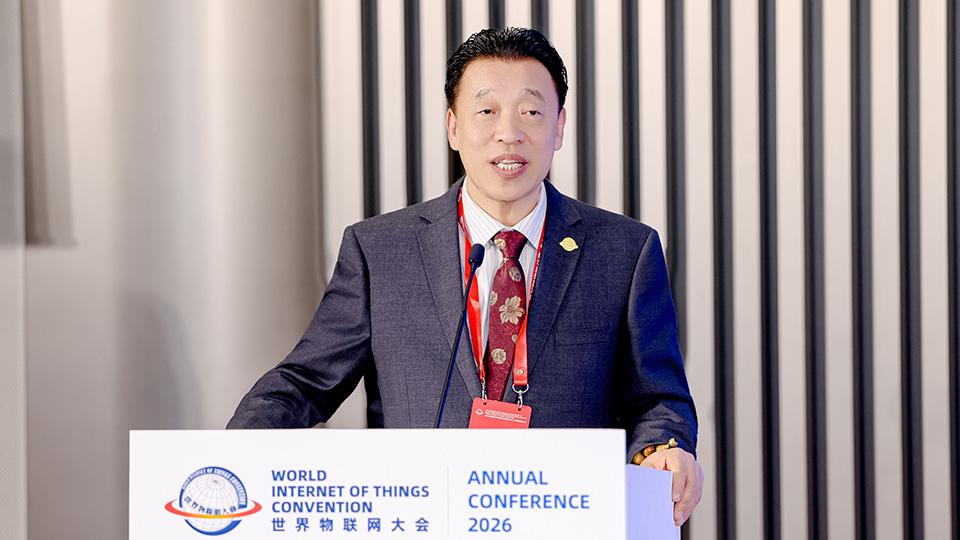
In closing remarks, Zhang Hua, Vice Chairman of the WIOTC Executive Committee, congratulated newly‑inducted committee experts and thanked supporting member entities BOE Energy and Shenglong Electric Group. He noted that the Forum facilitated multi‑dimensional exchanges covering technologies, industries, finance and standards on intelligently interconnected things and computing power‑power grid synergy, completing milestone deliverables including White‑Paper release, new‑report initiation and expert appointments. Looking ahead, all stakeholders should pursue co‑growth for shared benefits, collaboratively build the global new digital energy ecosystem, and contribute to worldwide carbon‑neutrality endeavors.

The World Internet of Things Convention (WIOTC)
is an IoT-digital-economy international organization that is innovative and nonprofit. It is also a nongovernmental organization included in the registry database of the United Nations ECOSOC.
The name of the organization is also the name of our leading annual conference with high-end and cutting-edge brand - WIOTC as an international event.
Copyright © 2015-2026 WIOTC.org, All Rights Reserved. 世界物联网大会 版权所有