
WIOTC official news feed, bringing you real first-hand information
The Second Conference on Sustainable Development of Global Intelligently Interconnected Digital Economy and WIOTC 2026 Opens in Beijing, China
——Blue Paper on the Sustainable Development of the Global Digital Economy Released
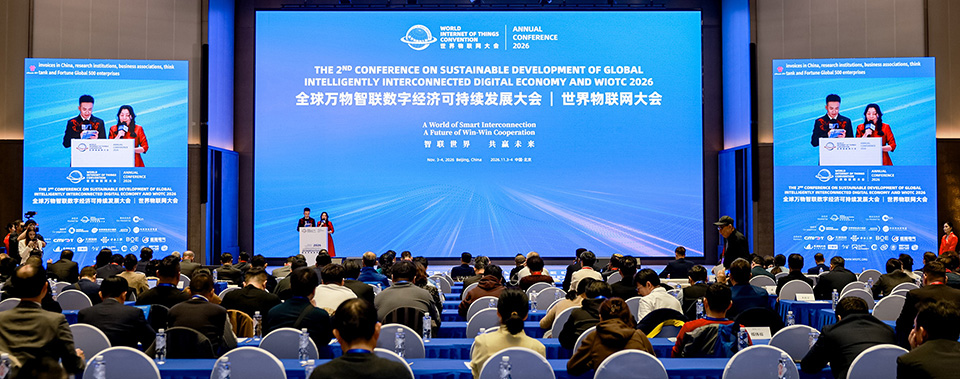
The Second Conference on Sustainable Development of Global Intelligently Interconnected Digital Economy and WIOTC 2026 was grandly convened in Beijing, China, on November 3. Amandeep Singh Gill, Under-Secretary-General of the United Nations and UN Secretary-General's Special Envoy for Digital and Emerging Technologies, delivered the opening address. He Xuming, WIOTC Chairman, delivered a keynote report entitled“A World of Smart Interconnection, A Future of Win-Win Cooperation”. The Blue Paper on the Sustainable Development of the Global Digital Economy and the White Paper on Digital Energy were released at the conference. The conference brought together government officials, ambassadors and diplomats from more than 60 countries, including China, Russia, France, Switzerland, India, Uganda, Kazakhstan and Mongolia; heads of international organizations such as the UNDP and the ITU; representatives of Global 500 companies; experts and scholars; and representatives of enterprises in the IoT and digital economy sectors. European Commission President Ursula von der Leyen and the Acting Secretary-General of the UNCTAD sent letters of congratulation. The conference drew more than one million on-site and online viewers worldwide, marking the opening of a new era of the intelligent world.
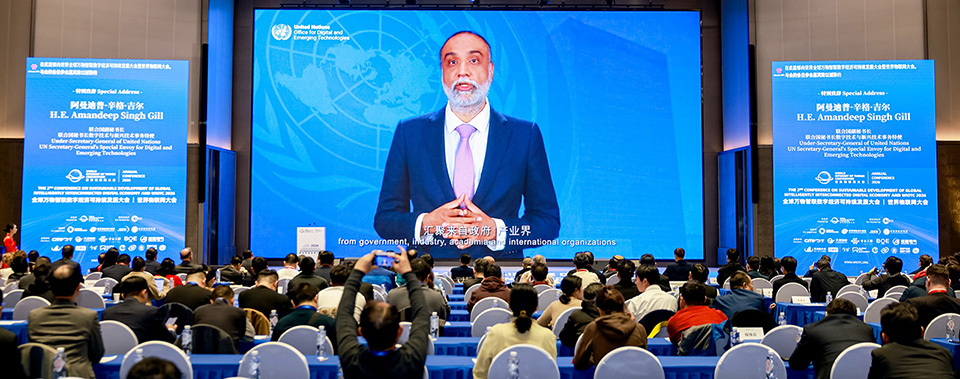
In his address, Under-Secretary-General Singh Gill stated:“The value of IoT lies not simply in connecting billions of devices, but in creating connections that improve lives, strengthen resilience and advanced sustainable development. The intelligently interconnected should not become another source of inequality. It should be a force for inclusion, enabling every community to participate in and benefit from digital transformation. Achieving this requires investment not only in technology but also in trusted infrastructure, interoperable standards, secure data governance and international cooperation across borders. Over the years, the WIOTC has brought together governments, businesses, researchers and international organizations around these shared objectives. At a time of rapid technological change, that spirit of cooperation is more important than ever. Let us continue working together to build a better future for all.”
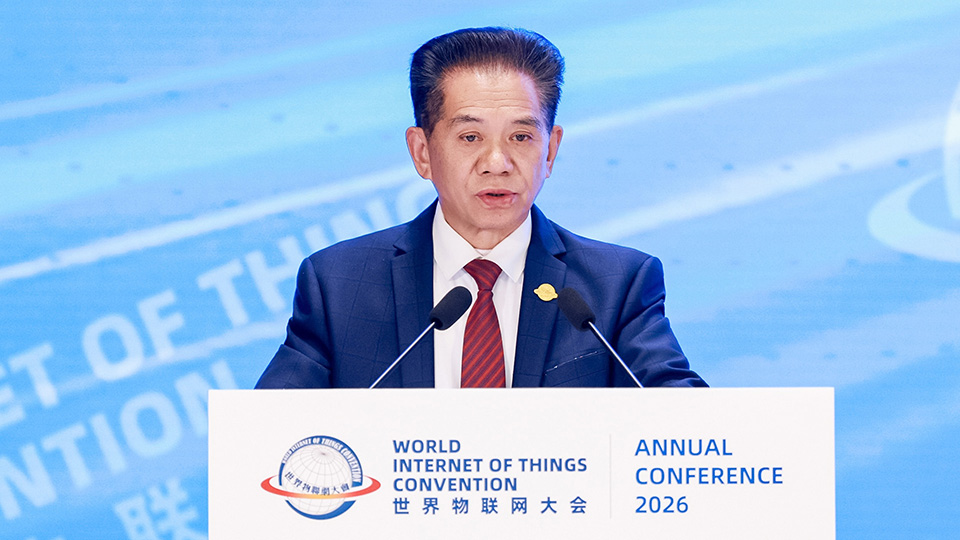
Chairman He Xuming stated in his keynote report: “The industrial transformation and socioeconomic revolution driven by next-generation IoT and artificial intelligence technologies are reshaping the world and ushering in a new era of the intelligent world. In 2026, global digital economy growth is projected to approach 9.5%, while the traditional digital economy is expected to exceed USD 53 trillion, accounting for approximately half of global GDP. The number of connected devices worldwide is expected to surpass 40 billion, representing growth of more than 13%. “China has become a major driving force behind global digital economy growth. Its IoT-enabled digital economy ranks first in the world. More than 1.3 million enterprises in China possess the intelligently interconnected advanced digital-economy infrastructure, and the country leads the world in invention patents. By 2026, the number of 5G base stations supporting the intelligently interconnected digital economy is expected to exceed 5.3 million. China is rapidly advancing the development and deployment of 6G, satellite communications and quantum communications. The number of connected devices in China has exceeded 4 billion, representing growth of more than 15%. Its digital economy is expected to surpass USD 15 trillion, growing by more than 13%. China is projected to overtake the United States in 2027 and is emerging as a global model for innovation and development in the intelligently interconnected digital economy.” Starting this year, WIOTC will provide strategic advisory services to national and local governments and enterprises worldwide to support advanced digital economy development and socioeconomic progress. It will also offer advanced digital economy models and market frameworks, helping national and local governments establish “Innovation Centers for the Intelligently Interconnected Digital Economy” and develop advanced digital economy industrial systems and solutions for building core market structures. In addition, it will strengthen international cooperation with global standards organizations and certification bodies to jointly develop internationally applicable standards for the intelligently interconnected digital economy and provide support for certification services.
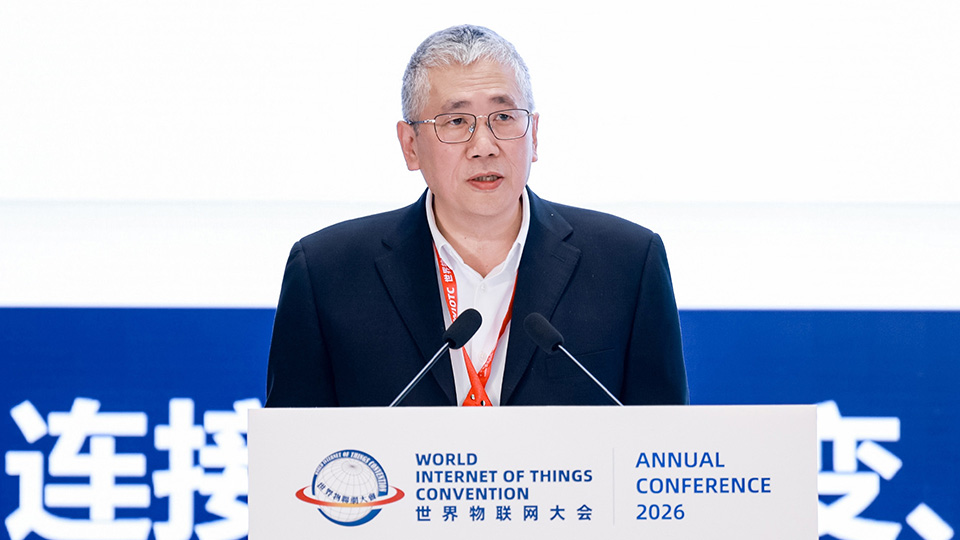
Zhang Ping, Academician of the Chinese Academy of Engineering and Counsellor of the State Council of China, delivered a report titled “Token Circulation and Semantic Measurement in the Foundation of the Intelligently Interconnected World”. He noted that, with the integrated development of next-generation communication networks such as 5G and 6G and of computing power networks, the future intelligently interconnected Internet will need to address not only resource connectivity, coordination and intelligent decision-making, but also the establishment of measurable, settleable and operable service systems. Tokens can describe the scale of artificial intelligence processing, but they cannot directly represent service value, nor can they serve as the unit of measurement, hard currency or value indicator of the intelligent economy. Scientific research on token measurement should therefore be strengthened, and “semantic bits” should be explored as a supplementary metric for measuring task-oriented information delivery, so as to form unified rules and standards that are recognized by all parties and can be objectively verified, thereby supporting the formation of business models for the intelligent economy and the reasonable distribution of industrial value. This provides the theoretical basis for the “advanced digital economy model” pioneered by the Convention.



Jim Matthews, IEC President; Shao Xinhua, Board Director of WBBA; Ulrika Francke, CEN President; Jan Ellsberger, Director-General of ETSI; Ma Chaode, Assistant Resident Representative of UNDP in China; Seizo Onoe, Director of the Telecommunication Standardization Bureau of ITU; Ni Jianzhong, President of the China Mobile Communications Association; H.E. Hallam Henry, Ambassador of Barbados to China; and Moses Sackie, Counsellor of the Embassy of Ghana in China, stated in their respective addresses and remarks that IoT and artificial intelligence technologies are being applied ever more widely in industry, agriculture, transportation, healthcare and daily life, driving intelligent upgrading across sectors and continuously enhancing innovation capacity. The global IoT and digital economy markets continue to expand, with an ever-broader range of applications. Governments around the world are introducing policies to advance the transformation of the IoT and digital economy. In particular, in such fields as intelligent manufacturing, smart cities and smart agriculture, IoT and artificial intelligence have become key forces driving global economic and social development.
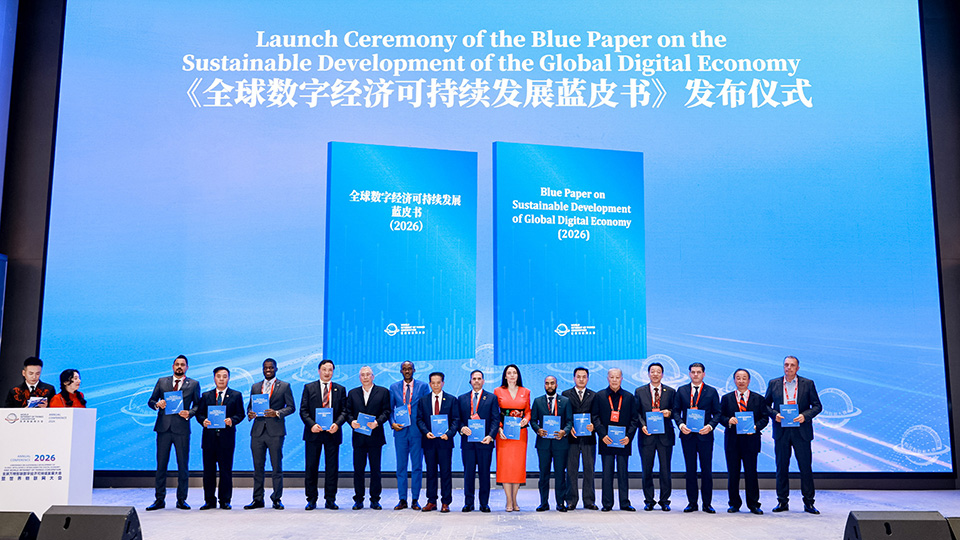
The Blue Paper provides an overview of the current state of the global digital economy and emerging competitive trends. It elaborates on the digital economy and its advanced forms, proposes strategic approaches to developing a global market for the intelligently interconnected advanced digital economy, identifies key challenges facing its development and puts forward corresponding recommendations. It also sets out an action framework for jointly building the intelligent world, providing strategic guidance for the transformation of human society towards an advanced digital economy.


The annual conference featured a plenary session and a series of parallel forums and activities, including the International Cooperation Forum, Ambassadors’ Forum, Smart Energy Forum, Industrial IoT Forum, Transportation and Auto Intelligence Forum, Standardization Forum and European Forum, as well as the Supply-Demand Matchmaking Meeting (Closed Session). Other activities included the presentation of Outstanding Cases of Intelligently Interconnected Digital Economy and the Intelligently Interconnected Digital Economy Awards. The conference focused on advancing the transition from the Internet of Everything to an intelligently interconnected world, and from the traditional digital economy to the advanced digital economy. Through digital innovation, it sought to promote the sustainable development of the global intelligently interconnected digital economy and society, and to jointly build a prosperous, secure and inclusive intelligent world. Its ultimate aim is to improve people’s lives through intelligent living, production and work, contribute to the achievement of the United Nations Sustainable Development Goals (SDGs), and support the building of a community with a shared future for mankind.

The conference also unveiled the Outstanding Cases and Awards of the 2026 Intelligently Interconnected Digital Economy. Enterprises and institutions including E‑Surfing IoT, BOE Energy, PATEO CONNECT, Onewo Inc. and Qingdao Binhai University walked away with the Outstanding Cases, Annual Enterprise Award and Innovation Project Award for a set of products, technologies and solutions such as “Ningxia Coal 5G Unified Network”, “AI-driven ‘Virtual Power Plant + Power Spot’ Intelligent Trading System”, “Porsche's new generation intelligent cockpit”, “New-Generation Distributed Industrial Wireless Network“, “Onewo Link-X: AI-Brain Solution for Smart and Low-Carbon Real Estate Operations”, “AI Box Integrated Hardware-Software Solution”, and “Multimodal Brain-Inspired Perception Driven Solution for Full-Lifecycle Intelligent Perception and Precision Nutrition Regulation of Livestock and Poultry”.
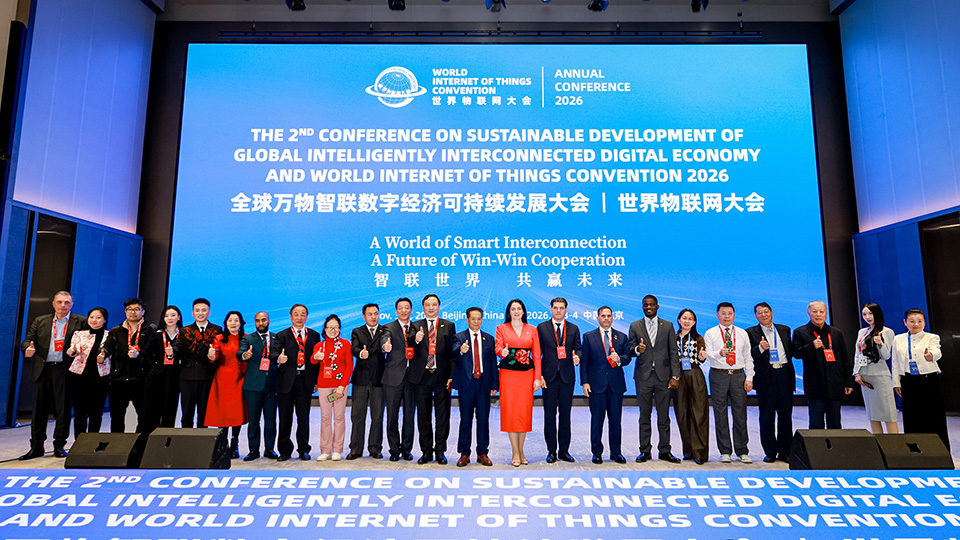
The conference was hosted by the WIOTC and co-hosted by the China Mobile Communications Association, with co-organization by the WBBA, the WGDO, the World IoT Research Institute, the IoT Innovation Alliance, the WIOTC European Chapter, the WIOTC Transportation and Auto Intelligence Commission and the WIOTC Digital Energy Commission. Special thanks to the Zhongguancun Science City Administrative Committee, China Mobile IoT Co., Ltd., E-Surfing IoT Tech Co., Ltd., CEC Industrial Internet Co., Ltd., Shenglong Electric Group Co., Ltd., BOE Energy Technology Co., Ltd., Shenzhen ETON Automation Equipment Co., Ltd., Alatau City Authority (ACA), Kazakhstan, the China Association of International Trade (CAIT), the National Engineering Research Center of Electric Vehicles, Beijing Institute of Technology, the College Alliance for Talent Cultivation and Discipline Construction of Regional Studies, the Beijing Federation of Industrial Economics, and other partners for their strong support. We also extend our appreciation to Jinmailang Jin Kuang Mineral Water for its beverage sponsorship.
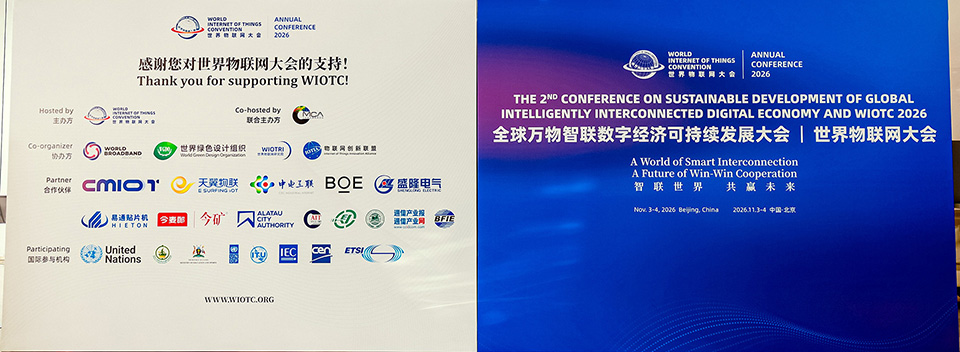

The World Internet of Things Convention (WIOTC)
is an IoT-digital-economy international organization that is innovative and nonprofit. It is also a nongovernmental organization included in the registry database of the United Nations ECOSOC.
The name of the organization is also the name of our leading annual conference with high-end and cutting-edge brand - WIOTC as an international event.
Copyright © 2015-2026 WIOTC.org, All Rights Reserved. 世界物联网大会 版权所有